Before the Internet things were different; this was the First Age.
If you wanted to get your message out there you needed either a lot of money, fame, or power. Usually you needed some combination of all three. Barring that you needed to find someone with money, fame, or power (or some combination) who was also willing to help you. These people were often elites of some kind. They could be professionals with an industry journal, the editor of a local magazine, a rich patron with connections, or even political party officials. These were the people who held the keys needed to pass into the public sphere: gatekeepers. Their job was to search out people of interest, people with something interesting to say, and promote them. Musicians needed talent scouts, authors needed agents, writers needed editors.
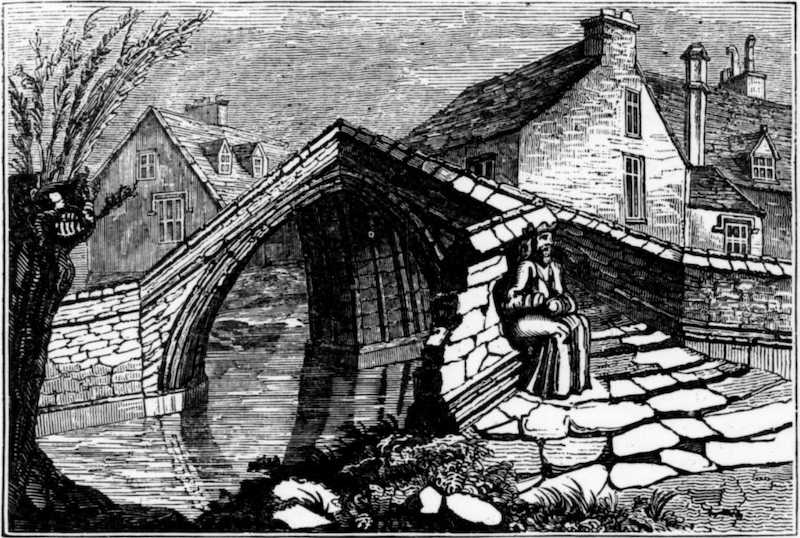
The Saturday Magazine, 1836–03: Vol 8 Iss 240
Attention was infinite and quality content was scarce. Gatekeepers filtered through the trash and surfaced the gems. The public paid attention because that was all that could be done.
The Internet broke this system; we entered the Second Age.
Self-published books made it so anyone can get their book out there. Self-service distributors allow anyone to publish music, YouTubers to self manage, and blogs (and more importantly social media) give anyone a platform to speak. This system didn't replace the gatekeepers (traditional publishing and record labels still exist) but it broke open the floodgates. A lot of this new content was bad but some of it was amazing.
Attention became the currency of the land, a finite resource sure but one similar to oil: plentiful enough to build entire industries on. Tools existed to help filter it all. They became our gatekeepers: the feeds, then the algorithms. At first it was easy to find good, new content. Over time that got harder, but the system seemed to be stabilizing.
Large Language Models broke this system; we are now in the Third Age.
Now the Web is flooded with text, images, video, and audio not made by any human. Books exist now which no human (including its supposed author) has ever read. We have reached a breaking point. Where before there was always at least one person who'd seen every piece of content, now it seems likely most content will never be read except by the unsuspecting fool who mistakes it for real work.
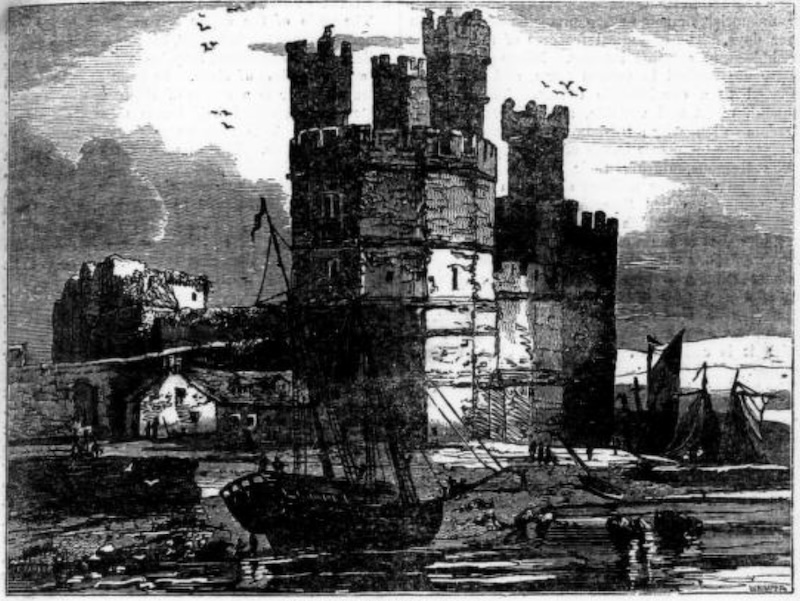
The Saturday Magazine, 1834–08-23: Vol 5 Iss 137
Yet in this new age, where attention is a scarce resource compared with the glut of content to consume it, we have found ourselves bereft of those who can wade through the cruft and the noise and surface real wisdom. The legacy gatekeepers exist still, but they guard their own hoards. The feeds exist but few resort to them. Algorithms are still king, but will they be able to keep up with this barrage of meaninglessness?
We humans want to be distracted, to be entertained. That is what modern social media does for us. Yet people seek meaning too, and wisdom. In the prior age (and still somewhat today) that wisdom lies hidden in the muck, surfaced by legacy gatekeepers and by algorithmic feeds. I only wonder if this dam will hold.
For centuries, the Romans kept their enemies at bay. Cities that once needed walls abandoned them. The inner lands were safe. Then the institutions failed. Enemy armies roamed the heartland and nowhere was safe. The walls returned.
Speaking for myself these days I seek brand name goods on Amazon where I can. I find myself scrutinizing labels and FCC approval stickers. I buy what WireCutter recommends because at least I know that the product actually exists and has seen human hands. I prefer books published by Penguin/Random House or others of the Old Guard. I discover YouTubers via recommendation from those I already trust and treat algorithmic recommendations as inherently suspect. In short: I seek gatekeepers, not to surface diamonds in the rough, but to hold back the oncoming tide.
Am I alone in this?