Last year I heard this song from a band called Loser Demon. The song is called Holding Ground and here's the chorus that has been stuck in my soul ever since (added words, mine):
would you believe that this is it and it is good?
doesn't surprise me and i hope that it never would
(I'm) holding ground
I heard that phrase and was immediately repulsed the first time, yet something about it lingered in my heart. I think that reaction is likely the same for lots of people these days. I mean, look at the world? Look at the strife and the trouble and the heartache? How can this be good?
I think for me the real wisdom in those lyrics is that it's not describing what ought to be, but what is. Can the world be better? You better believe it. In so, so many ways.
Yet the first part of that line reminds me of something else: the feeling of growing up and seeing that the adults are just as scared and clueless as the other kids in your class. At that point I think we all have the moment of realization, the fear that surely this can't be how things work. We then spend the rest of our lives learning to cope, or deny. But it's true.
This is it.
The second part of that line is even more difficult to bear. So this is it, this is what the world is, how can this horrid state be anything like good? The moral repulsion is valid and, for me, it's strong. Yet while the world continues to get worse in numerous ways, any reading of history will tell you things are a whole lot better than they've been for 99.99% of human history. Not in all ways, sure, but in the vast majority of ways: yes. It's not a question and those who debate that question are ignorant of how it feels to bathe once a week in baths powered by slaves without soap, suffer from near constant famine and plague, or live in a world where 50% of children died before the age of 15. Today humanity has succeeded in fending off a great many of the curses of the natural world.
Not only that, but this world we have made is one built on consistent improvement. We have built structures that are intended to continually improve themselves and the lives of those they serve. These systems are flawed, and indeed bogged down and slow, but this can and should be fixed. Yet still, the mission, to improve the world and the lives of all within it, is one we have continually worked to fulfill. In the past fifty years we have done so much together as a country and a world to make things right.
In other words: this is good.
Yes, we have a great deal to do and so much of that progress has not been equally distributed, nor has it been made without harm. That is part of the work we have left to do, but let's not lose sight of our progress. Our job now is to advance the rest of the way, and to hold the ground we've gained.
The Liberal Order
Liberalism starts with the assumption that it’s just human beings trying to do the best we can, and there will be mistakes, there will be errors, so we need strong self-correcting mechanisms.
– Yuval Noah Harari on the Ezra Klein Show
I idolize Congress, and always have. I dislike many of the people in it, but the institution itself makes me so damn proud to be an American.1 The House and Senate, though born of terrible compromise and riddled with problems, are together the engine of our shared work and the flagship of liberal democracy. The workings of Congress are almost mythical to me, shrouded in a veneer of Roman-looking symbols, British traditions, and founded on a Declaration containing some of the most beautiful words humanity has ever written.
Yet, I remember what it felt like when I discovered that a lot of the people in the House of Representatives are lawyers and farmers and business owners. A lot of them are career politicians, but even so, I remember thinking:
Wait, those are just people. Flawed people. Like me. But if that's it, if that's who's in charge, who's looking out for us?
And there's the rub. This is it. There is no one else. That's precisely why we've constructed institutions, to protect us from the failure that might come one day. The trouble is that One Day™ seems to be nearing and many of us see it coming. I am one of those people. Many see nothing at present to protect. I am not one of those people. As well, these day's it's trite to defend our current world, and so people tend not to do so. I do not want to be one of those people.
So I'm not sure who this is for, perhaps it's only for me. But I needed to write it, because in my heart I believe in this world we have made, and I do not wish to see it burn. Leading up to a—shall we say contravertial—celebration of our country's 250th birthday, I figured I would try to make the best case that I can for the world as it could be, and for a more Perfect Union.
What This Is
When in the Course of human events, it becomes necessary for one people to dissolve the political bands which have connected them with another, and to assume among the powers of the earth, the separate and equal station to which the Laws of Nature and of Nature's God entitle them, a decent respect to the opinions of mankind requires that they should declare the causes which impel them to the separation.
We hold these truths to be self-evident:
- that all men are created equal
- that they are endowed by their Creator with certain unalienable Rights
- that among these are Life, Liberty and the pursuit of Happiness.
- that to secure these rights, Governments are instituted among Men, deriving their just powers from the consent of the governed...
–The Declaration of Independence (formatting mine)
These words, along with the French Declaration of the Rights of Man and Citizen are some of the most important words mankind has ever written. Read them again, really read them and take in their meaning. It's profound stuff, especially if you know how history has usually gone, and it forms the foundation on which this whole modern world has been built. Today you'll hear from many different voices that these words are a convenient lie, that even their authors did not truly believe them, but that is not true. Even if written by imperfect people, words can be meant sincerely. And besides, regardless of what those words meant to their authors, let it be said: they mean something to me.
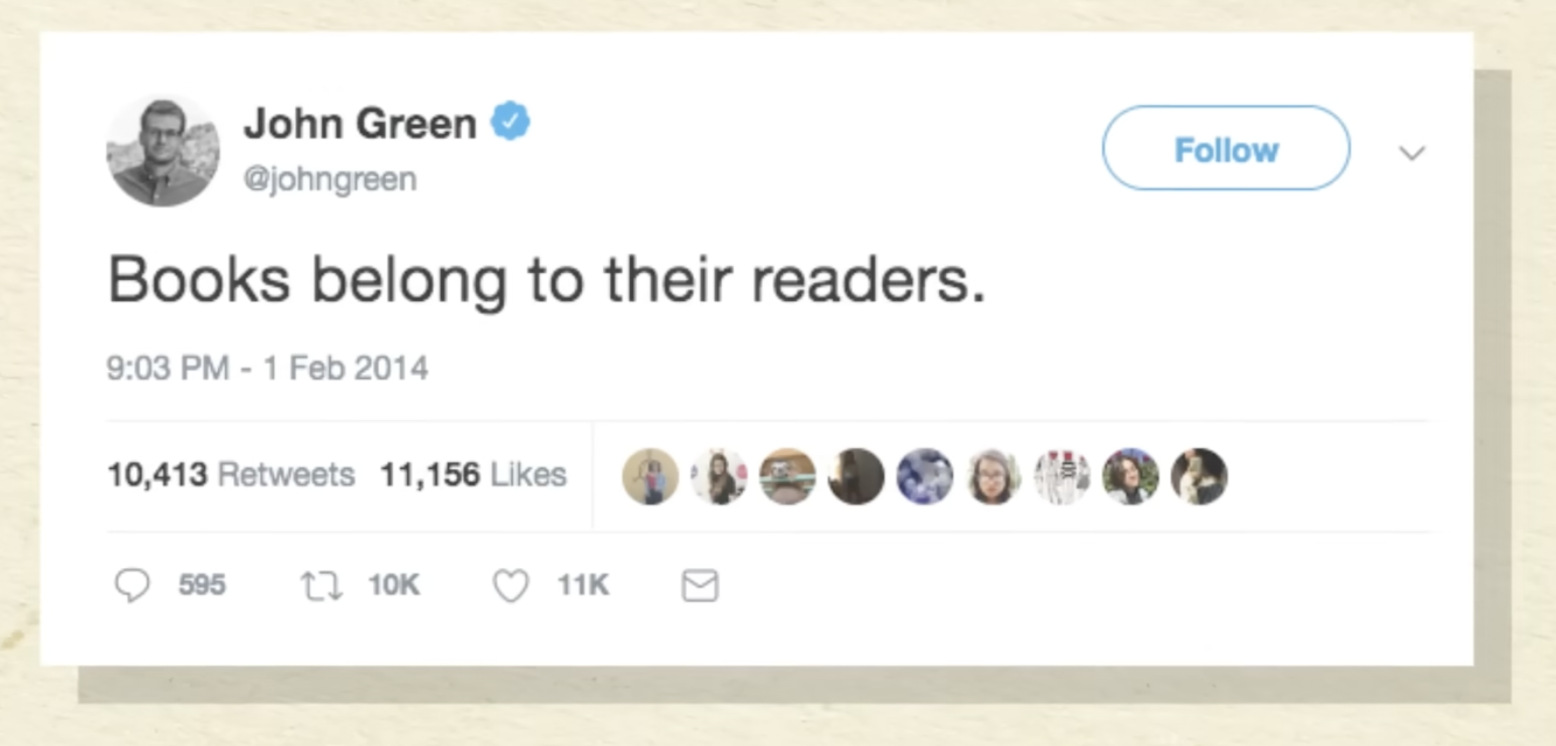
Sure, the intent of the founders is important—as context—but it matters more what those words mean to us today. The present belongs to the living, as Thomas Jefferson wrote. Today we are mired in debates of who to honor, and who historically to believe, but that debate does not really matter. What matter's is not whether George Washington believed all people are equal, but if we believe it. Washington is dead. We are not, and it is our country that exists today, not his.2
Words have meaning both to those who write them and to their readers, but there are more of one than the other and once the author dies, their intent need no longer have sway over their words. Their words can grow beyond them and their intent. This is the beauty of words. Once they are set free, they become something more.
The words written in the Declaration of Independence, or The Rights of Man and Citizen, or the U.N. General Charter, these words are born of the idea that the world is imperfect, and that it will always be so, yet also of the idea that here, in them, is a world worth chasing, a dream to which we can always aspire. I want that world, I believe in it, and I want that dream to come true. If that commitment to equality, liberty, justice, and the pursuit of happiness for all sounds trite, then let it be so. Regardless, it is true. And these days, it needs to be said.
Ceding Symbols
There is something to be said for the Roman practice of erecting statues to personified virtues instead of actual people. Today we go through a constant cycle of tearing down once-proud symbols after reevaluating their impact. This process, however painful, is good. Yet it also betrays the frailty of our veneration and pokes holes in the shared illusion we have of ourselves as a country and that's done profound damage to us.
Yet we should celebrate ourselves, and the world we all have made together (obviously not just the U.S.). We should celebrate the virtues of Victory, Liberty, Equality, and Justice. We used to know how to do this. The Capitol building records that fact on its dome and in the Visitor's Center. It's striking and proud and we should do it more.
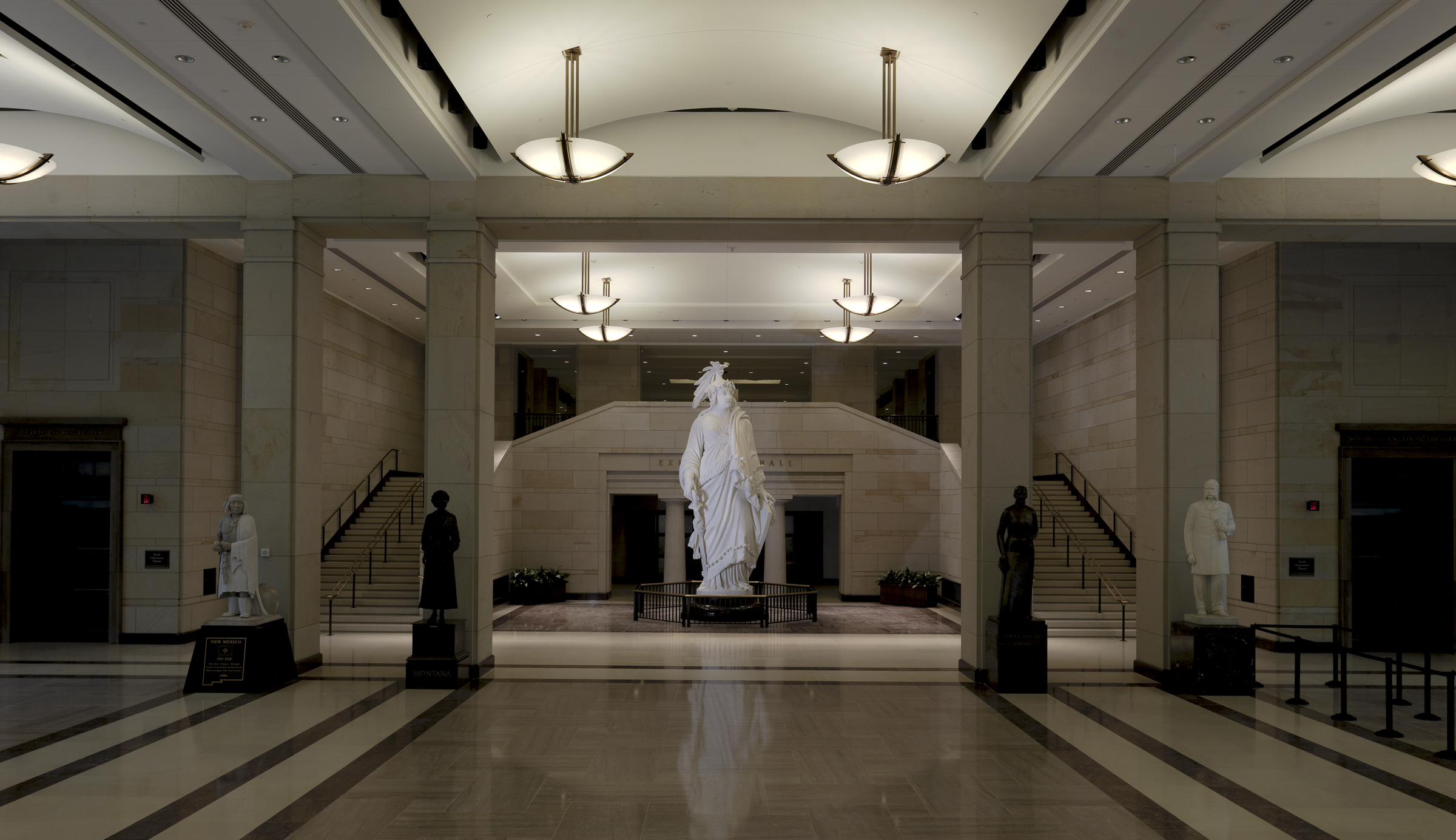

I fear these days we would be caught in endless debate over the cost and location of such a statue, and whether it distresses the birds, yet such monuments to our shared triumph deserve to exist—else we risk erecting triumphs to a single man which is the very antithesis of what this country is.
We should not be afraid to stand up, proud to be a citizen of a great country, of a vision of the world where people are free, and to be proud to defend that cause even when current events do not align with our shared vision of the world.
As Rosenblatt writes, for almost 2,000 years, liberality meant “demonstrating the virtues of a citizen, showing devotion to the common good and respecting the importance of mutual connectedness.”
Liberality was talked about everywhere. You can read about it in Cicero, in John Locke, in the letters of George Washington. And yet we never talk about it today. Liberalism as a political philosophy and movement completely elbowed out liberality as a virtue, as an ethic that citizens aspire to meet.
–Helena Rosenblatt via Ezra Klein
I feel that ethic deep within my soul. In liberal (read: left-leaning) circles it's cringe to admit such things, instead we avoid celebrating an ideal for fear of celebrating violent nationalism. The end result of that has been to cede all ownership of the symbols of our shared greatness to the people who seek to destroy it. Yet we must hold within ourselves the greatness to which we aspire and the conflict and trouble it has wrought and be prepared to defend those values in spite of that previous failure. Doing otherwise is a failure of conviction, not one of intelligence.
Before I go on with this short history let me make a general observation—the test of a first-rate intelligence is the ability to hold two opposed ideas in the mind at the same time, and still retain the ability to function. One should, for example, be able to see that things are hopeless and yet be determined to make them otherwise. This philosophy fitted on to my early adult life, when I saw the improbable, the implausible, often the
impossiblecome true.
– F. Scott Fitzgerald, The Crack-Up, February 1 1936
A More Perfect Union
To me, The Declaration of Independence is so much more beautiful than The Constitution, not just because it isn't so soured by the 3/5ths compromise, but because the language is grander and more profound. Still it is a beautiful document. Consider the 1st, 4th, 5th, 13th, 14th, 15th, and 19th amendments. The positive freedoms of speech, assembly, press, and equal protection along with the guarantee of a jury trial, the prohibition of slavery, establishment of birthright citizenship, and guarantee of suffrage to women sit right along side the negative freedoms from unreasonable search. Those amendments are this country's most profound admission of its belief in the goals laid out in the Declaration of Independence, and they are the reason the United States became the light of the world, a shining city on a hill.
The Preamble to the Constitution echoes the Declaration of Independence directly (emphasis mine):
We the People of the United States, in Order to form a more perfect Union, establish Justice, insure domestic Tranquility, provide for the common defence, promote the general Welfare, and secure the Blessings of Liberty to ourselves and our Posterity, do ordain and establish this Constitution for the United States of America.
That call, to better ourselves and our country through continued improvement, through trial and error and relentless self-evaluation, is what it means to be an American. We don't talk about the obligations of citizens are in this time, it's cliché at best. Yet we are called to do this work as part of the duty we have to maintain this great state. We've fallen behind on our progress lately, and we have much to answer for, but perfect was never the end game.
A friend of mine calls this philosophy the idea of It Sucks Less
. If what you're doing now sucks less
than it did before, you're making progress. That is what the Constitution calls for, and it's what we must continue to do.
I refuse to let the great ideas on which this country was founded be torn down idly by corrupt and authoritarian fools beneath the dignity of recognition and I refuse to sit and let the dream of what it means to be an American, a fighter for liberty and justice, be corrupted and belittled. Those of us who feel the spirit of the cause should continue this fight, however hard it may still prove to become.
Let's take this opportunity, as mired in conflict as it is, to recommit ourselves in this moment to what it truly means to uphold the values we have at our foundation, and to admit to ourselves that things can and will get worse if we do not. No one else is coming to save us.
This is it. Hold this ground.
I am an American and I bow to no one.
2 I refuse to call the United States a Nation because it isn't one. The words country and nation are not synonyms. The U.S. is great precisely because it isn't a nation-state.