It was a sweltering August day. I made my way across the promenade, and through the bustling crowd, to a small line forming outside the Timkin Art Museum. Inside, I stumbled on Pieter Bruegel the Elder's Parable of the Sower, painted in 1557, nearly five centuries ago.
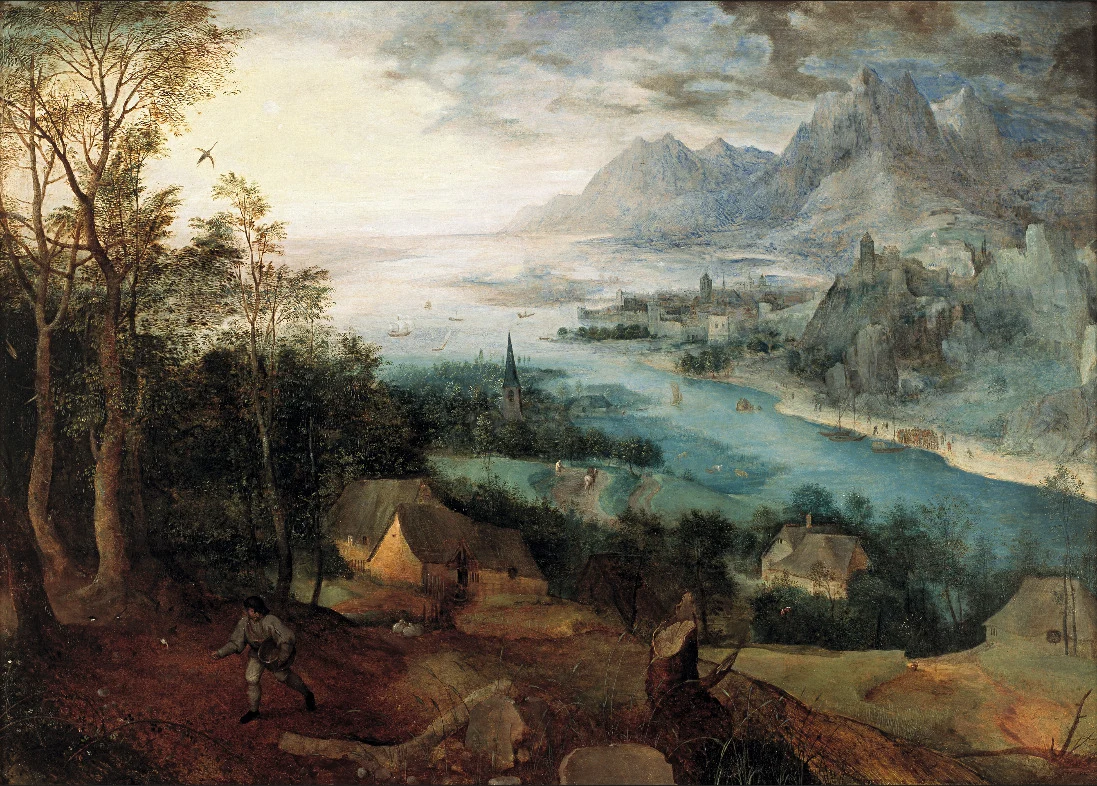
10.000 Meisterwerke der Malerei
When Bruegel took his brush to this canvas, the New World had just been found by Europeans, and the United States was still long into the future. Around me then were all those people, those wandering souls, who across those centuries stood before this same piece and idly mused at a thing made by the hands of a long-dead Flemish man.
I thought about him. Not Bruegel—another man—one whom I've come to know these past few years. He does not know of me, yet we both could have seen this very painting. We were connected through the mists of time by this canvas portal to the past.
It was October 10th, 2023 at about ten in the evening. I was crawling down a research rabbit hole, as I am wont to do. I wanted to know more about the history of alchemy. I knew the stereotypes, the modern myths, but I wanted to know what real alchemists were doing in their labs.
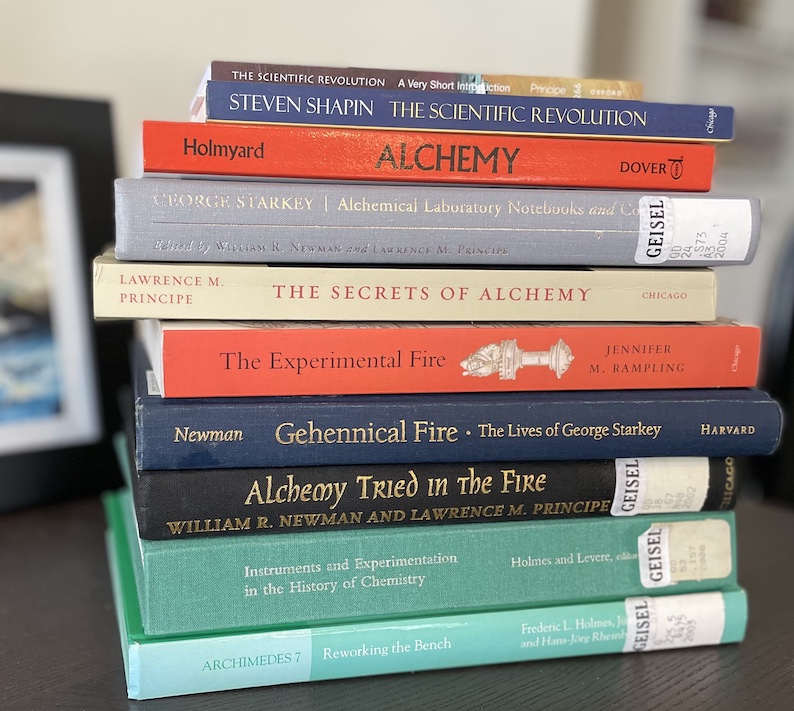
The Secrets of Alchemy by Dr. Lawrence Principe purported to answer this exact question and so I tore through that wondrous book, my face lit by screenglow. When I finished it, I dove into the footnote trail, seeking answers to further questions.
I've pored through a great number of books in the intervening years, and written a fair number of different blog posts on the subjects I discovered there. I met an array of different names: Ripley, Helmont, and Lull, different characters whose stories intermingled and wove a grand tale between the centuries on worn and precious parchment.
Did you know that the seventeenth century was the heyday for alchemy in Europe? Or that Isaac Newton was an alchemist. So was John Locke, in a way. The two were part of a circle of scientists, alchemists, doctors, and philosophers who would go on to found the Royal Society of London. So many famous names in history were there, bound up in the story of alchemy and its rise and fall from grace.
London in particular was a hotbed of alchemical interest at the time, as Germany had been in the decades before. All of Europe was abuzz with it. Yet, in all my reading, had there been no mention of the New World?
What about American Alchemists? Was there such a thing?
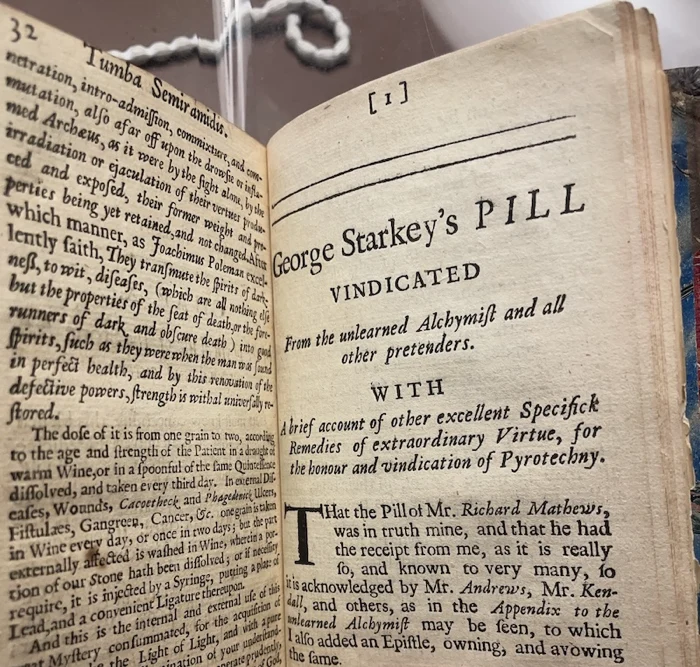
Photo: mine
That question would lead me right to him and to the realization that we'd already met. I'd forgotten his name, but Principe had introduced us and his colleague, Dr. William Newman, had penned the man's biography: George Starkey, a name that I will never forget again.
Born in Bermuda and educated as a doctor at Harvard, George Starkey became interested in alchemy early in life and so moved to London in his twenties to practice medicine and alchemy with England's best. At the time, alchemy, which was more akin to pharmacology today, was all the rage among the eager classes. Science was blossoming and so much was open to discovery.
It was with this understanding that Starkey came into the circle of Robert Boyle, John Locke, and Isaac Newton. Like Newton, Starkey is a rare breed among alchemists and among historical figures in general. You see, we have his personal notebooks, and so in addition to deciphering his published works, we get a glimpse behind the curtain into the sort of man he really was. Dr. Principe worked to translate those scribbled writings from their original Latin into English and in them we find a man working to untangle the mysteries of the universe, to puzzle out its causes and effects.
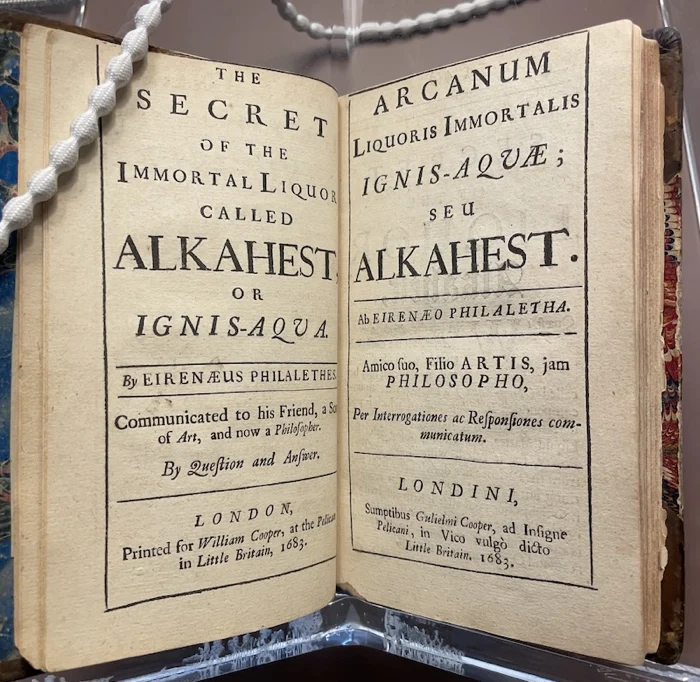
At the dawn of the modern age, Starkey and his cabal of conspirators wrote to each other as they quested to remake human knowledge. Starkey spent most of his free time beside his furnace, distilling various substances and trying to piece together the makeup of creation. He calculated mass lost to volatile vapors, discovered all manner of variously useful materials, and kept diligent notes that revealed a rather stubborn and quizzical nature. In a curious twist on the traditional method: rather than debate the nature of matter in the cloistered halls of the colleges, Starkey brought his inquiries directly to Nature herself, occasionally asking questions only to be refuted by the fire
.
Aside from his successes making ice powder and specialist oils, Starkey described a new kind of "Philosophical Mercury" which he claims will lead him to his ultimate goal of making the Liquor Alkahest, a precursor to the philosopher's stone. He struggles with his work and his increasingly meager finances for years until on one page he writes:
Εύρηκα!
I remember reading that word, strangely Greek instead of Latin, in a coffeeshop one night. Mathematics taught me a few Greek letters and so I sounded out the word, knowing vaguely how the letters sound like their names. Eureka!
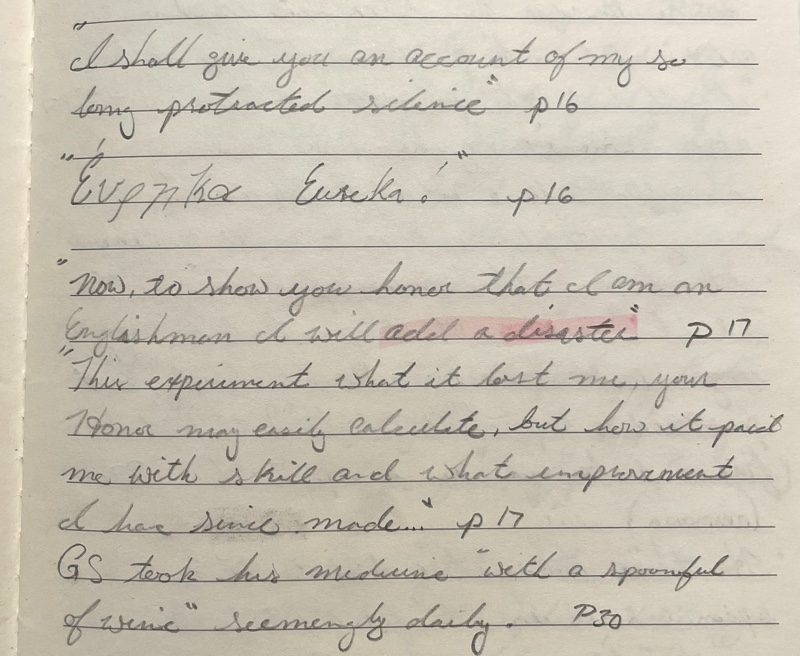
On the next page we see a letter to his friend, Robert Boyle, recounting this discovery.
Now, to show you honor, [my friend] that I am an Englishman I will add a disaster.
Unfortunately, Starkey lost the results of this experiment, as the glassware flask that contained it broke and spilt its precious liquor into the coals. Reading this, I deflated in my chair right alongside him. His accounting of his life and his work is a baffling ride of success, of trial and error. It's all so very human.
On one page, Starkey wrote a set of prayers to God, and beside them a note to his future self: a plea, a reminder, to never drink so much wine at the tavern again.
[I swear,] I shall not game at any tavern for more than half a pint of wine at most nor be in the company of any gamester nor at play with any when I do play that I know to be a swearer or a vain person nor to stand by while they do play.
He notes later that he broke this promise.
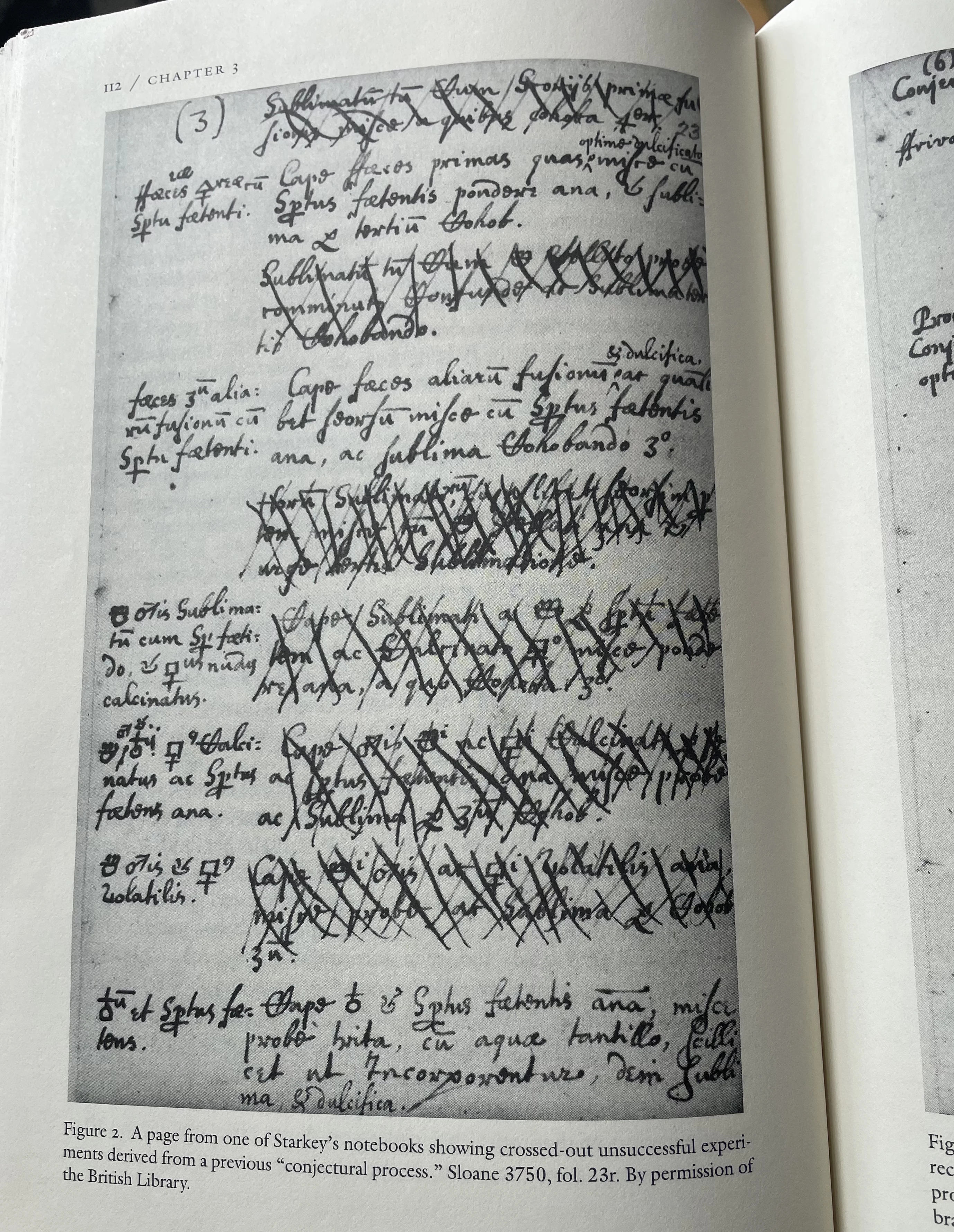
Photo: mine
It was through these pages, through the myriad descriptions of boiling and distilling this or that poisonous substance, through all the triumph and the failure, that I got to know Mr. Starkey not as a historical figure but as a man, a curious, insightful, and flawed man trying to understand the world.
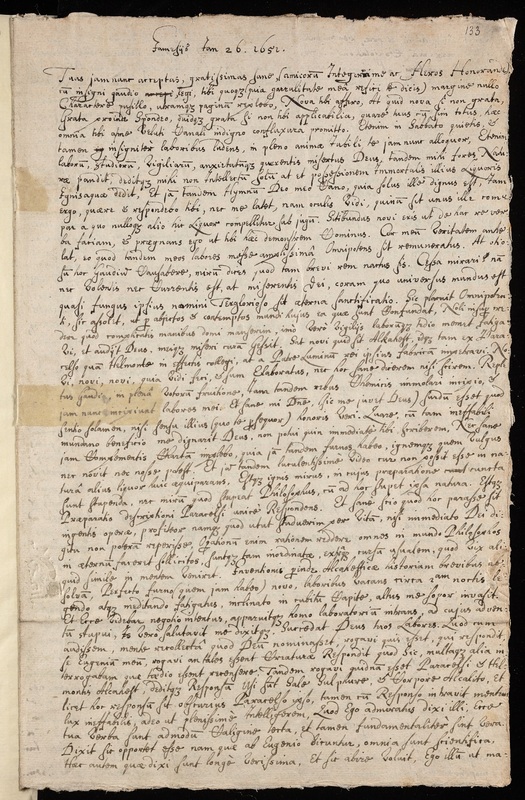
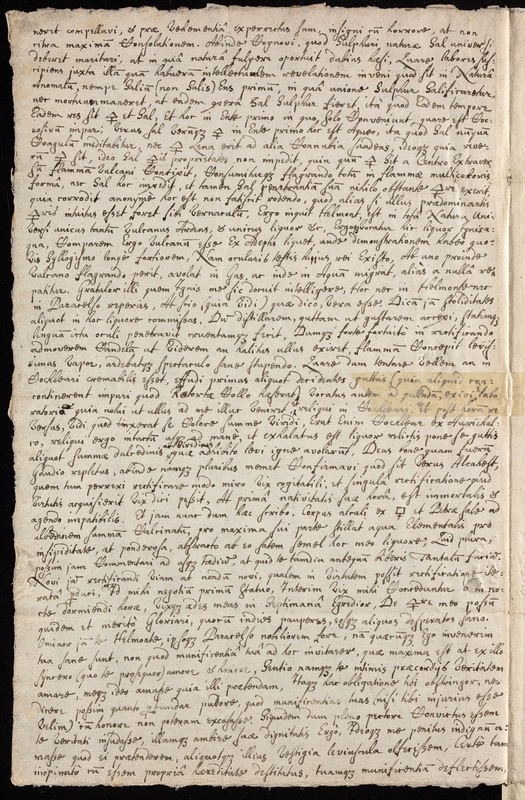
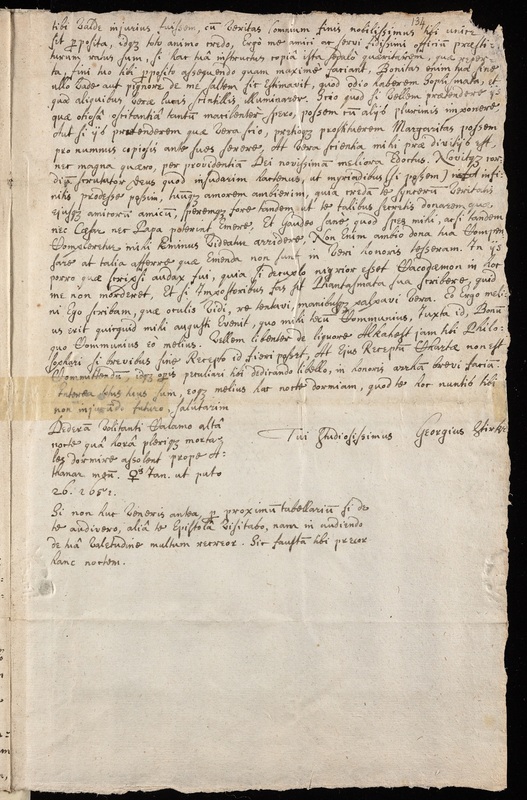
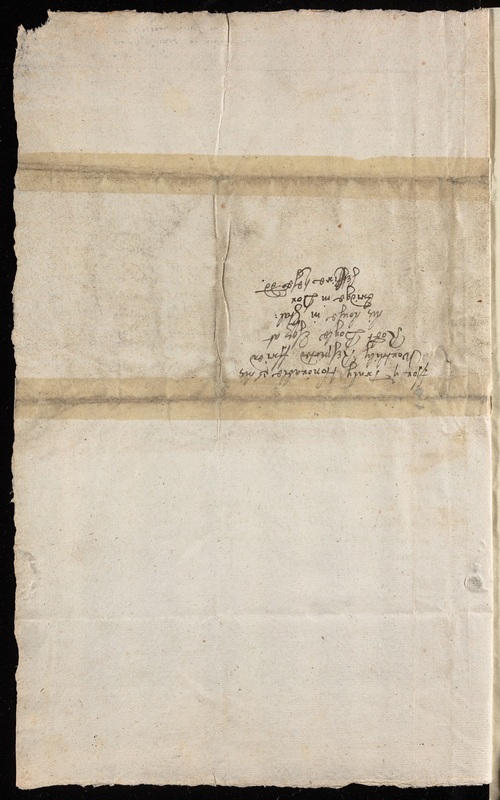
Many of Starkey's letters to Robert Boyle survive. The two were friends and, for a time, Boyle was Starkey's student and patient. It was there, amid the pages of a particular letter to Boyle, that I was again captured and enthralled. In it, Starkey provides an update to his patron on the status of his experiments. Here was a man trying against the odds to follow in the footsteps of the Adepts in the same way all modern chemists follow in his.
It's in this letter that Starkey describes what would be, for him, a typical method of experiment.
While I was distilling, I took a drop to taste and in an instant it penetrated my tongue and at once made it bloody; and when by chance during its rectification I moved the candle nearby so that I might see whether any vapor was exhaling, the very light vapor took fire and burned with a truly stupendous spectacle.
Yet this experiment did more than burn his tongue and likely singe his eyebrows. Starkey truly believed that he was onto something momentous, although like many great discoveries, this one was accidental.
So when I wanted to determine whether it was combustible in a spoon, I poured out the first few drops falling [into the receiver] (because they contained some impurity that adhered to the neck of the retort) but being called by someone, I left the laboratory, since I did not want anyone to visit me there...
I left [the matter in] the spoon, and... left it alone until morning, by which time the liquor had exhaled, leaving behind a few drops of the greatest sweetness and greenness which evaporated when exposed to a moderate fire.
Good God, how I was filled with joy!
For me, the best part comes at the end. In a post-script, Starkey inquires about his friend's recent spat of bad health, but before that he closes with the following words. I've left the Latin in place this time because it's just as beautiful as the English translation.
Dederam volitanti Calamo altâ nocte quâ horâ plerique mortales dormire absolent prope Athanar meum.
Tuis studiosissimus, Georgius Stirke
♀ is Jan. ut puto 26, 1651
[My friend], I give to you my flying pen in the depth of night, when most mortals are wont to sleep, at my furnace.
Yours studiously, George Starkey
Friday, I think, January 26th, 1651*
It was in that moment, reading those words, that I had a new quest. I needed to see this letter. Not a translation on a page, but the real thing. There were no pictures of it in Principe's book, and so, armed with the manuscript number, I hurried to the Royal Society website, only to find that neither Starkey's notebooks nor this particular letter had been digitized. If I wanted to see them, I'd have to either go to London myself or work with the archivists to get them photographed.
One day I hope to visit the archives, but for now the latter would have to do.
I still visit the Timkin Museum, and the larger San Diego Art Museum right beside it, whenever I get the chance. When I do, I seek out works, like that of Mr. Bruegel, works old enough that it's possible Mr. Starkey would have seen them. We have no record that he ever did, of course, but to me that isn't really the point. What I feel, staring into those brush strokes is the same as when I read the pages of Starkey's letter: connection, with a history and with a man I've come to know.
One of the goals of the alchemists was transmutation, of base metals into gold. Another was eternal life. No one lives forever, but we all die two deaths: the first of the body, and the second when your name is said for the last time. Starkey never achieved the former, but the latter is within our power.
Thank you George Starkey. You have given me so much these past few years, and for that I am honored and so, here and now, I give to you my flying pen.
My thanks to Dr. Principe, Dr. Newman, and all the other authors I have read on this subject in recent years. It was you all who inspired me to dig deeper and eventually to inquire at the Royal Society. Thank you to the Royal Society, and to the hardworking archivists there who worked to preserve and image these letters, and to let me share them with the world.
* This translation is my own.