Let's say you're someone who wants to learn about an academic discipline. Perhaps advanced Physics, Sociology, Early-Modern History, or Cognition Science. Of course, there's YouTube pop-sci videos (which I love) and no shortage of products and services that purport to teach you the basics. But what do you do when you want to go beyond those basics?
I'm not an expert, but I have been on a few of these journeys myself and so I want to lay out the paths I've taken and offer some advice to those who, like me starting out, had a very hazy view of the terrain and no idea who to trust with your education.
Starting Simple
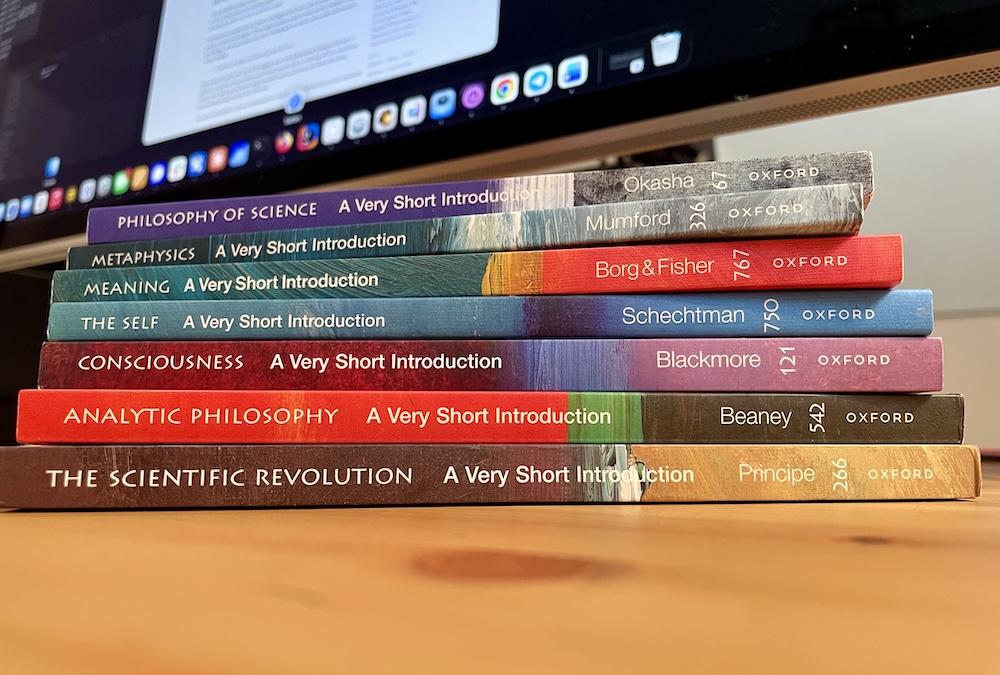
For anything vaguely academic in nature, I highly recommend trying out one of the books in the Very Short Introduction series.
The books are, as expected, very short (~100 pages) and cover a quick survey of the topic at hand and its various sub-disciplines. They're approachable, quick to read, and the chapters are organized by discipline. At the end, there's not only a bibliography of sources, but a section dedicated to Further Reading.
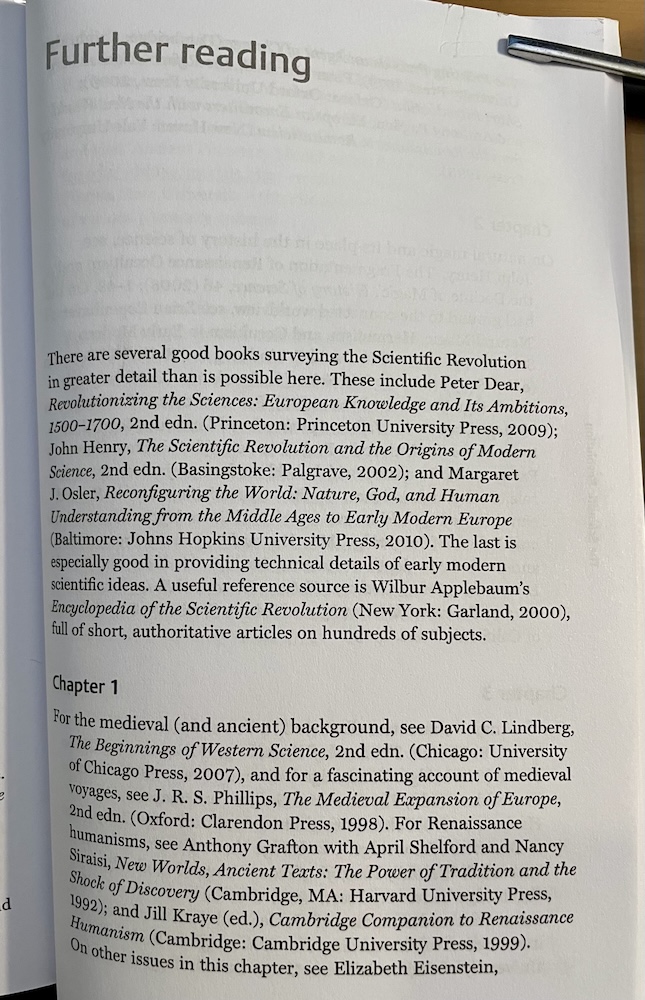
That section is a gold mine. One of the biggest issues with independent learning is the lack of guidance. It's hard to know whether you're on the typical track or venturing off into treacherous woods. These books are written by long-time field experts, and in my experience have been invaluable for getting the basic lay of the land.
Journey into the depths of those recommendations, then if you're ready dive into actual courseware.
Open Courseware
Universities are still the gatekeepers of advanced knowledge, and they've graciously published a wide swath of excellent course materials. Universities like Stanford and MIT have made entire major tracks available to anyone with an internet connection. If you can find the syllabus: grab it. Buy (or rent) the books, read them, and take notes. These topics are difficult, and they take time to learn.
💡 Tips for Finding Books & Course Materials
- Try to find the course syllabus
- Like a specific professor? Check out their books
- Some of those books are freely available
- For Math & Science: check out Dover series books
- When in doubt, follow the footnotes
For me, the first major challenge here is to find a professor who speaks your language. There are several methods and interpretations of the mathematics of something like General Relativity and there are a dozen different angles from which one could tackle the problem. Do you want "Physics for Engineers" or "Physics for Mathematicians"? Perhaps you need to start earlier with, "Introduction to Kinematics". Watch the first lecture on a topic you think you know. Does the professor explain it well? The first lectures are usually review and ground-laying. If you're lost at the start, it won't bode well.
Passive Learning
Crash Course, PBS SpaceTime, 3Blue1Brown, Numberphile, and Veritasium are some of the best question-prompting educational resources ever developed. Even comedic series like MapMen and Half as Interesting have their place in this new world of distributed learning.
Learning is about prompting the viewer, the reader, (you) to ask questions. To do that, you need to not only be familiar with the material, but you need to approach if from multiple angles, to identify gaps, and to ponder the implications. Speaking for myself, funny and wondrous videos help me do that.
They're also a form of entertaining, passive learning retention. Repetition helps cement knowledge. Watching college lectures is difficult. It's time-consuming and it's taxing. If a pop-sci or pop-history video helps you retain the material, then it's helping.
The Literature
Once you've garnered enough knowledge to be dangerous, it's time to dive into The Literature: the published research books and white-papers from academic institutions and experts.
This is perhaps the most challenging part. I recommend you get yourself a notebook, some highlighters, and a printer. I prefer to scribble notes on the paper, and to read away from screens.
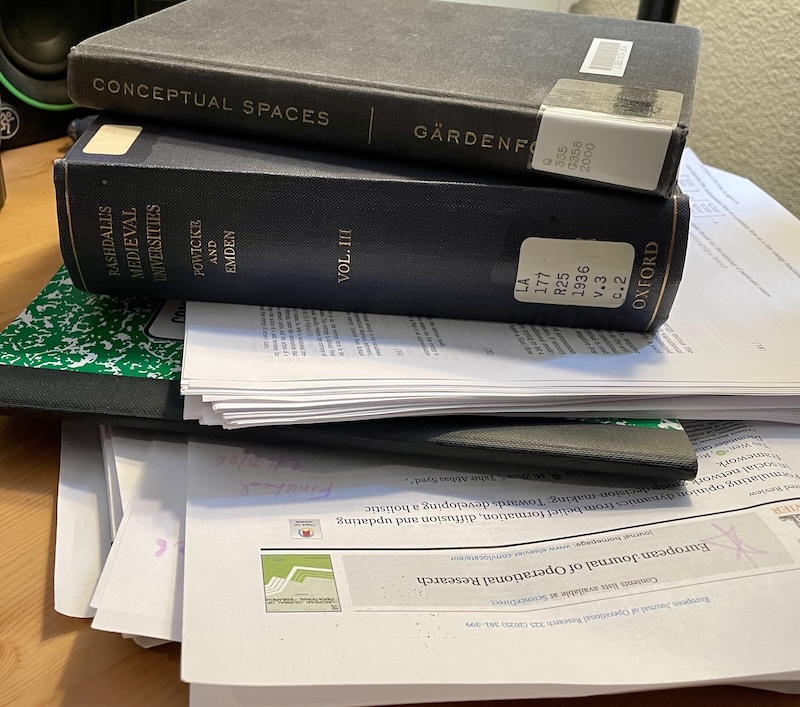
Whatever you do, do not just go to Google Scholar and start searching. You'll be completely overwhelmed (or maybe that was just me). To effectively use the literature you need two things:
- The Canonical Terminology
- A Picture of the Current State of Research
The biggest issue with traditional web search is that you need to know the right words to use if you want your search to be effective. LLMs like Claude are very useful here. However the most useful tool is going to be a kind of paper called a Review or Survey paper. Here's an example.
These papers try to give an updated picture of the field and its current dilemmas, questions, and methods. The good news is that review papers are often Open Access and so are available for free to the general public. This means that they can give you answers to both questions (1) and (2). Armed with that knowledge, you'll be more suited to searching through the random papers and books you find in the footnotes and Google Scholar searches.
When it comes to the literature however, there are a few very important caveats to keep in mind: pre-prints (like those on arXiv.org) are not peer-reviewed and are for Advanced Researchers only. To read those you need to be able to sus out what's signal from noise. The same goes for really any paper outside of the reviews mentioned above. Individual papers are the results of one experiment (or one meta-study). They're less likely to be readable by anyone outside of the particular niche of study and, depending on the journal, can be of dubious quality. Finally, AI-written garbage papers (from so called Paper Mills) are flooding the literature at present). Remember, you're in the woods now. Tread carefully.
Personalized Critique
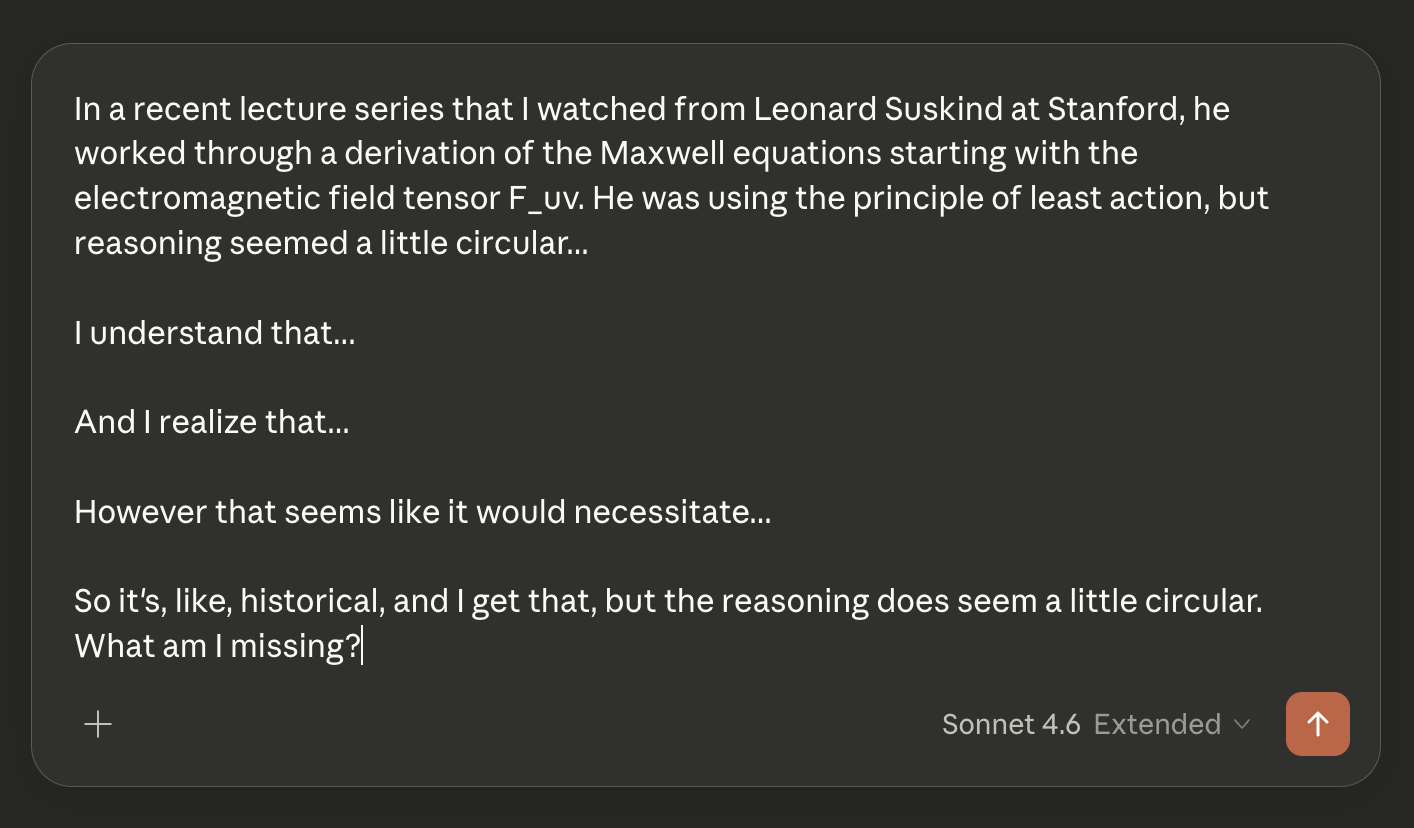
I think a lot these days about the old C.G.P. Grey video: Digital Aristotle.
I've found great success in having AI grade my homework and help explain the solutions to specific problems because it's there that I've been able to constrain my questions and their likely solutions in ways that I can more often tell when it's misleading me.
This is helped by my asking it to critique my ideas, not simply tell me what's true. Critique flips the script and forces me to confront the ideas head on. I think a lot in analogies and having the ability to "gut check" those analogies has been hugely helpful, even when the technicalities of the comparison are slightly off.
The framing of critique helps avoid the implicit confirmation of your bad ideas. It also helps to avoid a key subtlety of AI tools: a machine designed to always provide a plausible-sounding answer has the side-effect of inadvertently supporting the impression that we know more about the world than we actually do.
Learning is about Trust
As a newcomer to a field, you have very little intuition about what is the "correct" course of action or whether the thing you're reading is correct. Learning requires trust in the teacher. Part of self-directed learning is deciding who and what sources to trust with your education. Not doing so, trusting blindly, will veer you into incorrect or fringe ideas very quickly and you won't even know it's happening. Aside from the technical details of a given subject, you need to learn how to be a good judge of your sources and to extend trust only to sources that deserve it.
All of this stuff takes time and significant effort.
Don't be discouraged by the difficulty or time-commitment. A major track at a college takes years of full-time study. It's ok if it takes you a long time to make progress, learning is hard.