I read a fair bit of non-fiction that spans a number of different genres. But the trouble with non-fiction is that it never answers a question without raising further questions. Non-fiction comes replete with footnotes: a ponzi-scheme for the curious mind.
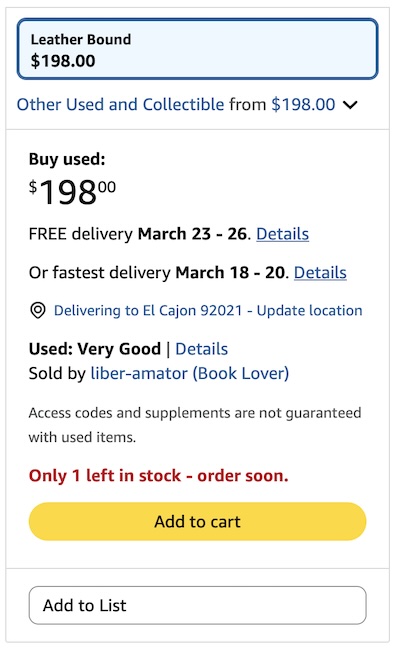
Of course, this leads very quickly to a fundamental problem. The deeper down the rabbit hole you go, the more likely you are to find that the cited works are academic, rather than consumer texts. Reading non-fiction, especially when it comes to history or science, you very quickly leave the realm of what you can easily find on a bookstore shelf. Sometimes you get lucky. Sometimes these academic books are relatively cheap, other times it's stamped with a textbook-level price tag or the book is simply out of print.
The Internet Archive exists of course, and if the book is really old then that's a good place to start. However, it will never be the full solution.
Several people reading this are likely already screaming: go to the Library. However, most readers would be correct in assuming that one's local city library does not stock the esoteric academic text from the mid-1980s that you're looking for. Wander the little shelves of mass-market fiction and explainer books that fill my local library for example and you won't find anything of the sort. My university library, located just down the road, might have them but I'm not a student and so the best I could do would be to wander in and skim the title for a few hours while being unable to take it home.
There is a solution though, one that I'm sure many people out there already know about, but I didn't. So I'm here to make sure the good word is spread.
You have access to basically any book you want,* through a system called Inter-Library Loan (ILL).
The World's Library
Assuming you live in a city or county connected to some segment of the Inter-Library Loan system (of which there are many), your local city library can request books from basically anywhere, all for free or sometimes a modest fee (in San Diego it's $5 per request).
From here, you leave the beaten path and venture into the rather informal system of ILL. San Diego, for example, has three methods of ILL depending on the reach you need and the speed at which you need the given book. For us, the Circuit system integrates with our local universities to get you quick access to books in their catalog, while the Link+ system has a broader reach. In the end though, if neither of those two have the book you want, you can use WorldCat. WorldCat is a collection of catalogues from thousands of public libraries and colleges across the world. Given time to wait, you can get basically any book you want this way: including the "rare Ph.D. thesis that apparently only exists at the one person's alma-mater".
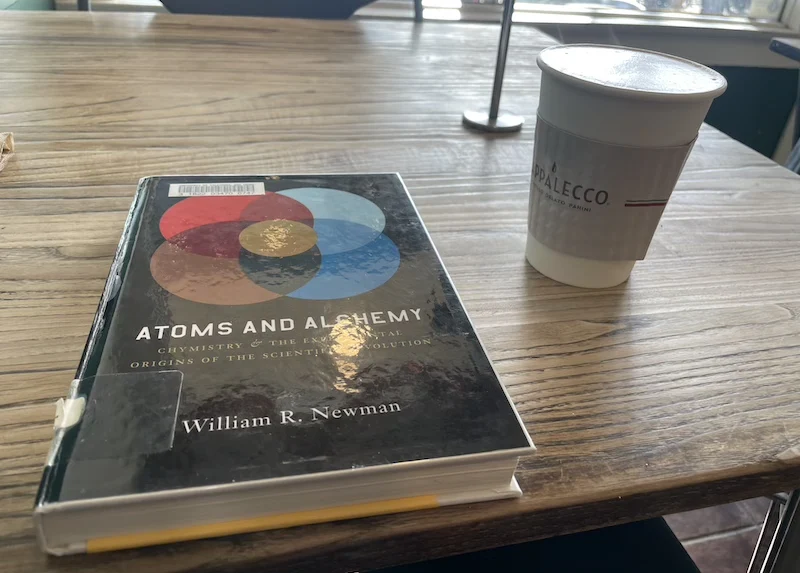
It's magical.
Of course, the moment you venture off the beaten path like this, you're going to encounter snags and irritations that simply do not usually happen with library loans. Delays, glitches, and a lack of transparency are occasionally par for the course here, but the reward is that you can call upon the world's libraries to summon forth whatever text you want.
Under-Appreciated, Under-Explored
Until a few years ago, I was not a big library user. As a kid, of course, I'd checked out books and in college I spent many an idle afternoon browsing the older stacks, but I always believed that you had to have connections to have access. Being at university, that granted you access. Working in academia, that granted you access. I never realized that, by filling out a little form online and then waiting a bit, I too could have access to those same texts. Perhaps this is common knowledge, but it certainly wasn't to me.
It's pretty wonderful to get to read a thing that journeyed far and wide to find you, passing through a dozen hands called by your personal whim. I love Inter-Library Loan. It legitimately changed how I read and research topics. These days, when I have a burning question or find an obscure footnote, I don't need to turn to increasingly unreliable internet sources, spend ungodly amounts of money on academic books, or scrounge quotes and snippets from a sketchy PDF scan. I can click a button, wait a bit, then hold the real book in my hand.
It's glorious and you should try it.